Need home stump grinding in Acworth?
Tell us about your tree, your house and your timing. We will pass your request to a local provider in our network so you can compare options.
No obligation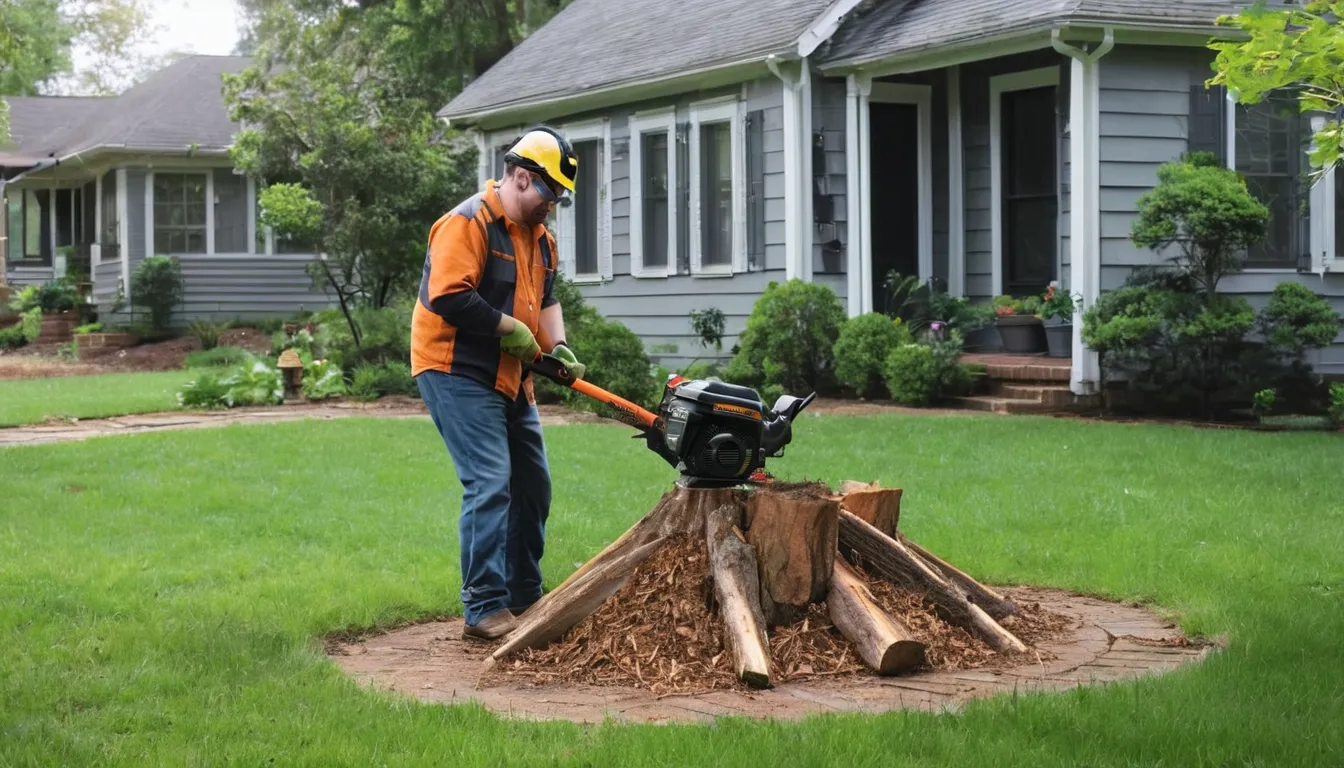
Say you have an old stump by the driveway. You mow around it, trip over it, and watch ants move in. Stump grinding turns that stump into wood chips so the yard can be used again.
Innerpsychological Tree Service is a referral service. It does not grind stumps. It connects homeowners in Acworth, GA with independent providers in our network. This page explains the steps in plain words, from hazards to prep to cleanup, so you know what to ask before you book. Older homes need extra care, because buried pipes and past repairs can sit close to roots. You will also see what affects the price, how deep the grinding goes, and what to do with the chips and the hole afterward.
Picture a house that has stood for eighty years. A big tree came down long ago, and the stump stayed. Now it is gray, soft and in the way.
Stump grinding is the fix most homeowners want. A machine shaves the stump into chips, well below the grass line. Here is what to know, starting with what matters most.
Say a child chases a ball across the yard at dusk. A low stump hides in the tall grass. One bad step and the afternoon is over.
Stumps also catch mower blades and string trimmers. A stump that sits low is the one people forget until it hurts.
Dead wood is a snack bar for insects. In our hot, humid summers, a rotting stump can attract ants, termites and beetles. If it sits close to a wall or porch, those pests may find the house next.
The damp wood can also hold moisture against soil near a foundation. That is not a good mix for crawl spaces or old brick.
Some stumps send up green shoots year after year. Roots can also creep toward walks, drains and old clay lines. Grinding the stump stops the sprouting in most cases, though a few species may need a second pass.
A grinder has a spinning wheel with hard teeth. The operator sweeps it side to side across the stump. Each pass takes off a layer, and the stump turns into chips.
Most providers grind about six to twelve inches below the surface. That is deep enough for grass or a garden bed. If you want to plant a new tree right there, tell the provider first. They may go deeper or move the spot.
Grinding leaves the roots in the ground to rot over time. Full removal digs the stump and main roots out. That leaves a big hole and a lot of soil to fill.
For most yards, grinding is simpler and causes less mess. Full removal makes sense if you plan to build over the spot or pour a slab. Ask the provider which fits your plan.
Say your house was built in the mill-era days. Over the decades, someone patched a sewer line, buried a cable, or ran a new water pipe. Nobody drew a map.
Roots may wrap around those old lines. A grinder works at the surface, but a good provider still asks what is buried nearby. Share any repair history you know about. Call your local utility marking service before any digging.
A stump near a crawl-space wall needs a gentle approach. A stump near a slab edge does too. Old brick and mortar can crack from vibration or flying debris, so providers may use shields or work from a safe distance.
After a thunderstorm or an ice storm, crews often cut a fallen trunk close to the ground to clear the yard fast. That work, sometimes called storm tree clearance, often leaves a rough, tall stump behind.
Do not rush to grind it in the first hour. First, make sure the tree and any damage are handled. Stump grinding can wait for a calm week. When you are ready, the stump will still be there.
Stump size is the big factor. Wide stumps take more time and more teeth. Hard wood costs more to grind than soft wood.
Roots, tight access, and the number of stumps all matter. A provider may set a minimum charge for a small job. Always ask for a written quote.
Move cars, toys, planters and lawn chairs. Open the gate if the machine must roll through. Tell the provider about any low branches, steep slopes or soft ground.
Mark sprinkler heads, pet fences and buried lights with flags. If you know where an old line runs, say so before work starts.
Expect a pile of wood chips where the stump stood. You can rake them into a garden bed, use them as mulch, or ask the provider to haul them away. Fill the hole with topsoil and sow grass seed.
If you want a new tree, wait until the chips settle. Fresh chips can pull nitrogen from the soil, so many people plant a few feet away.
A clear written quote helps you compare providers in the Acworth area.
If you also have a tree that still stands, ask whether the same provider can handle it. Some do both, and that can save a trip.
A machine shaves the stump into chips, below the lawn line, so you can mow freely.
Many providers also grind the larger roots that show above the ground near the stump.
Ask whether the provider rakes up or hauls away the wood chips after the grinding.
A good provider walks the yard, notes pipes or fences, and gives a written quote before starting.
Prices vary by stump size, wood type, access and region. These are typical U.S. ranges only, not quotes. Get a written estimate from the provider before work begins.
| Item | Typical range | Notes |
|---|---|---|
| Small stump (under 12 in.) | $100 – $250 | Often subject to a minimum charge |
| Medium stump (12–24 in.) | $200 – $450 | Hardwood costs more than softwood |
| Large stump (over 24 in.) | $400 – $1,000 | Wide stumps and big roots take longer |
| Extra roots above ground | $75 – $300 | Depends on how far they spread |
| Chip haul-away | $50 – $250 | Many providers leave chips for mulch |
| Tight access or slope | $50 – $200 | Gates, fences and hills add time |
Note how many stumps you have, how close they sit to the house, and where pipes might run.
Use the request form to ask about provider availability, and share photos if you can. Request a callback to check which providers in our network can take your job.
Clear the path, flag sprinklers and lights, and tell the provider about gates.
After grinding, rake the chips, fill the hole with soil, and plant grass or a new shrub.
Walk the yard with the provider first. Pipes, fences and old repairs shape how the grinder should work.
Aging brick, clay lines and past patches need a gentler touch near the walls.
Ask for a written quote that names the stump count, depth and cleanup.
Stumps rarely need a rush. Take time to compare providers and pick a good day.
Tell us about your tree, your house and your timing. We will pass your request to a local provider in our network so you can compare options.
No obligationMost providers grind six to twelve inches below the surface. That is enough for grass or flowers. If you plan to plant a new tree in the same spot, ask for a deeper grind.
It can be, when the provider plans first. Tell them about buried pipes, past repairs and foundation type. They may use shields or work slowly near brick walls, crawl spaces and slab edges.
Chips usually stay in the hole or in a pile. You can spread them as mulch, use them in a garden bed, or ask the provider to haul them away. Hauling may cost extra.
Tell us about your tree, your house and your timing. We will pass your request to a local provider in our network so you can compare options.
No obligation